
Monetary policy decisions directly influence currency demand and valuation.
Key indicators signal economic strength and impact exchange rate expectations.
Political stability and international events drive risk sentiment in FX markets.
Investment movement across countries affects currency supply and demand.

Trade With No Commission
Reduce your costs and boost your returns with zero commissions.
1:50 leverage
Amplify your investment potential by opening leveraged positions.
Fund's Protection
All client deposits are insured and held in segregated accounts.
Microlots available
Manage your positions precisely thanks to investment volumes available from 0.01 lot.
Loading...
Diversify your portfolio with access to over 3,000 trading instruments

Crypto
Trade leading crypto with deep liquidity.
Indices
Track the world's top indices like S&P 500 and NASDAQ.
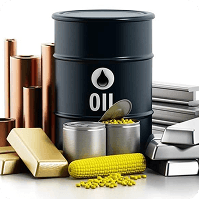
Commodities
Gold, oil, and natural gas — diversify with real assets.
Futures
Manage risks with future contracts across global markets.
Swaps
Explore swap specifications and trading details.

Stocks
Trade global stocks from leading companies across major markets.
Trader's Calculator
The term ‘forex’ is short for foreign exchange. Forex trading is the process of buying and selling international currencies with the objective of making a profit from fluctuations in exchange rates. For example, trading EUR/USD means speculating on the euro strengthening or weakening against the US dollar. Most currency pairs are priced to the fourth decimal place, where a single pip represents a movement in that fourth decimal.
The FX market is the largest financial market in the world by trading volume. It operates 24/5 and is highly liquid, allowing traders to enter and exit positions efficiently. High liquidity often results in tighter spreads compared to less-liquid markets. Although daily currency movements are typically small under normal conditions, pricing to the fourth decimal place creates frequent trading opportunities.
To start trading forex, you need access to a trading platform that offers currency pairs, typically via CFDs. After opening and funding your account, you can choose a currency pair and decide whether to buy (go long) or sell (go short) based on your market expectations. Traders commonly use technical analysis, fundamental analysis, or both, and should apply risk management tools such as stop-loss orders before entering a trade.
Forex prices are primarily influenced by economic and political factors that affect currency supply and demand. Key drivers include interest rates, inflation data, employment reports, central bank policies, and economic growth indicators. Geopolitical developments and market sentiment can also cause exchange rates to fluctuate, as currencies reflect the relative strength of one economy against another.
Forex trading involves significant risk due to market volatility and the use of leverage. Currency prices can move rapidly in response to economic releases or unexpected global events. When trading leveraged products such as CFDs, even small price movements can have a substantial impact on profits or losses. While leverage can enhance potential returns, it can also magnify losses, making proper risk management essential.
High trust score
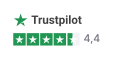
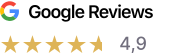
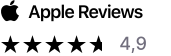
More than 15 Global Awards











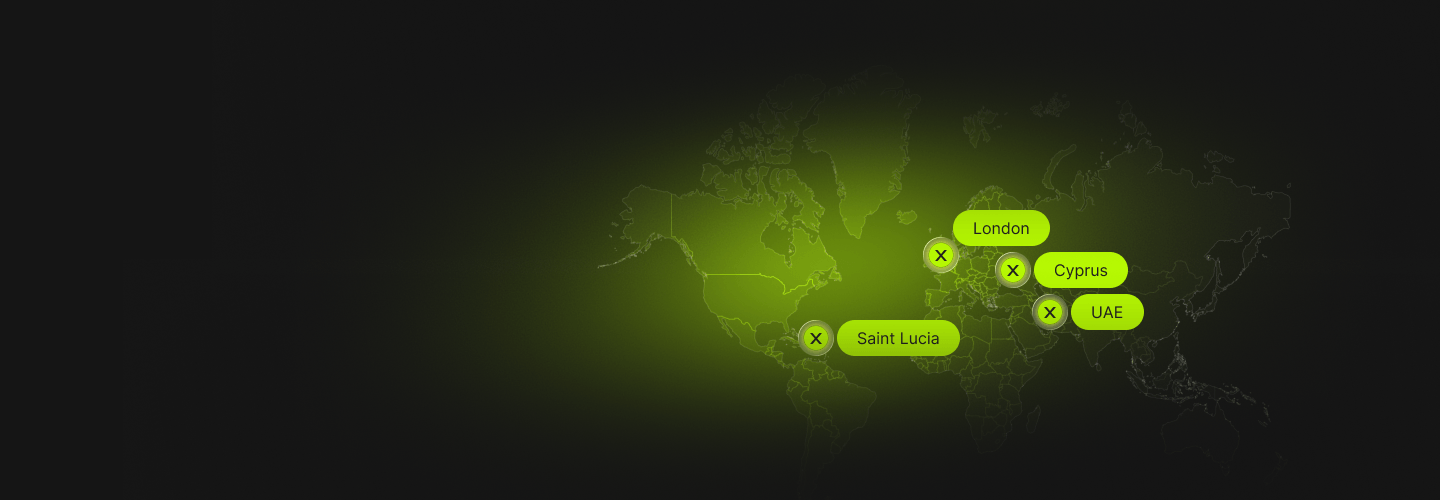
We operate under trusted international licenses, ensuring transparency and security for every client.